

Orthopaedic Mattresses
Orthopaedic mattresses are built for firmer, more structured support, helping keep the spine in a neutral position. They are a popular choice for back and stomach sleepers.


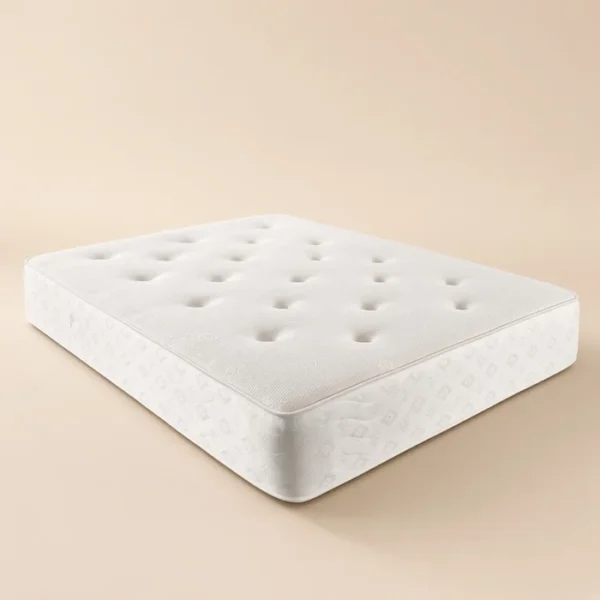


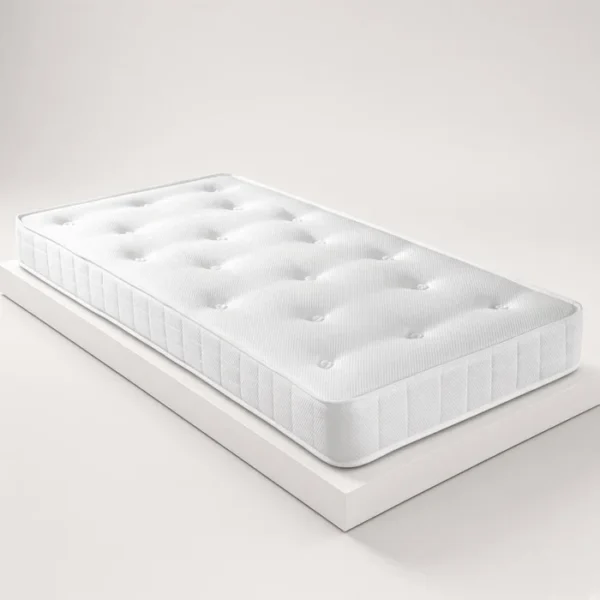
Orthopaedic Mattresses – A Firmer, More Supportive Build.
An orthopaedic mattress is built to hold you up rather than to let you sink deeply. The emphasis is on a stable, even surface that keeps the spine in a more aligned position, which many back and front sleepers prefer.
Seven mattresses sit in this list, including pocket sprung orthopaedic models, a memory-foam orthopaedic, a Bonnell open-coil design, a tufted children’s version and an extra-firm option. Six are made in all standard UK sizes; the children’s tufted model is offered in 3ft and 4ft.
‘Orthopaedic’ describes the supportive character of the build. It is not a medical claim, and it is not a substitute for advice from a health professional. If you simply want a firmer everyday mattress, also compare our firm mattresses.
What sits inside this group of seven
Pocket sprung orthopaedic designs, including 1000- and 2000-pocket units, give you supportive springs with a little more contour than a traditional open coil. The Bonnell (open-coil) model is a more classic, robust feel. The memory orthopaedic brings foam contouring to a supportive core, and the extra-firm listing is for anyone who already knows they want very little give at the surface.
One pillow-top orthopaedic also appears here and in pillow top mattresses, which may sound contradictory. The core remains supportive; the pillow top simply softens the first contact. If you like the idea of support but dislike a hard first feel, that model is the one to read carefully.
Who usually prefers this kind of mattress
People who sleep on their back or front, or who have found softer mattresses unsupportive by morning, often prefer this group. Heavier sleepers sometimes do too, because a more resilient core is less likely to bow. Side sleepers can still be comfortable, especially on the pillow-top version, but they should be sure they want a supportive rather than a plush starting point.
The children’s tufted orthopaedic is listed again under kids mattresses, because a firmer, even surface is often a sensible choice for a growing sleeper as well as for an adult.
Bases and sizes
A solid divan or ottoman platform complements a supportive mattress well, because the base does not add unexpected dip. A slatted frame is also suitable if the slats are sound and evenly spaced. Six of the seven models use the complete adult width run; the size guide lists each footprint.
Choosing support without turning the bed into a board
Support is not the same as harshness, but the two get confused in shop descriptions. When you read about an orthopaedic mattress, look for how the surface is finished as well as how the core is described. A tufted or pillow-topped model can still be supportive without the first contact feeling abrupt. An extra-firm model should be chosen only if you already know you want that unyielding start.
Pillows become more important on a supportive mattress. A pillow that was adequate on a softer bed can suddenly feel too high or too low once the mattress no longer lets your shoulder drop. It is worth looking at pillow height in the same week you change the mattress, rather than blaming the new surface for a problem that started at the neck.
If two people share and only one wants a more supportive feel, a single orthopaedic mattress will not solve that disagreement. In that case a zip-and-link set with two mattresses, or an honest compromise in the medium-firm range, may be kinder than asking one person to sleep on a surface they already dislike. The mattress can only do so much about two different preferences.
If you have liked the beds in a well-kept guest house or a simple hotel, and they felt ‘held up’ rather than plush, you are probably already in the right neighbourhood of this list. That memory of a steady, even surface is often a better guide than any adjective on a product title.
Frequently Asked Questions
Does orthopaedic mean it is medically approved?
No. In this catalogue it describes a more supportive construction. It should not be read as a clinical recommendation or a treatment for a back condition. If you have a specific health concern, take professional advice and then see whether a supportive mattress also feels comfortable.
Are all seven of these mattresses very hard?
They are supportive, but they are not identical. The extra-firm model is the most unyielding. The pillow-top orthopaedic has a softer first layer over a supportive core. Read the feel described on each product rather than treating the category name as a single hardness.
Can I use an orthopaedic mattress on a slatted bed?
Yes, if the slats are in good condition and reasonably close together. A sagging slatted base will undermine a supportive mattress, so the frame should be sound as well.
Is there a children’s orthopaedic option?
Yes. A tufted children’s orthopaedic mattress is included, in 3ft and 4ft. It also appears in the kids mattresses collection.
How is this different from the firm mattress list?
There is some overlap, because a number of supportive mattresses are also firm. This list is about the supportive build itself, including models that add a pillow top or memory foam. The firm list groups anything sold with a firm feel, regardless of the story of the construction.