

Blog
How to Dress a Bed with a Throw

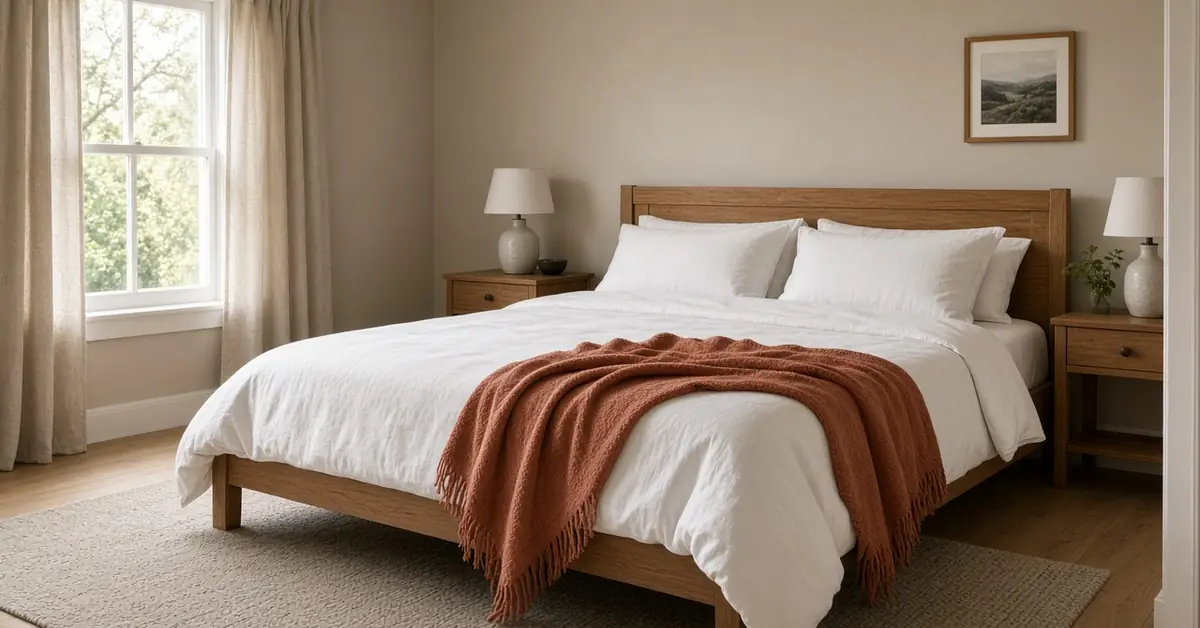
A throw should look like a natural part of the bed, not something added at the last minute to fill an empty space. The easiest approach is to make the bed completely, arrange the pillows, then place the throw across the bottom third of the duvet. This gives the bed colour and texture while keeping the main bedding and wooden frame visible.
There is no single correct fold. The best arrangement depends on the size of the throw, the shape of the bed and whether you prefer a neat or relaxed bedroom.
Start with the right size
Before thinking about colours or folds, check whether the throw is large enough for the effect you want.
A throw measuring around 130 x 170 cm will usually suit a single bed. On a double or king-size bed, the same throw is better used as a corner accent because it may look stretched if placed across the full width. For an even drop on both sides of a larger bed, look for a throw around 200 cm wide or more.
These measurements are a guide rather than a strict rule. Measure the width of your mattress and decide how much fabric you want to hang over each side. A full-width arrangement should extend slightly beyond the mattress without touching the floor. If the throw is narrower than the mattress, place it to one side instead of trying to make it reach both edges.
Make the bed before placing the throw
Shake the duvet to redistribute its filling, then centre it so the drop is roughly equal on both sides. Smooth the surface with your hands, but do not worry about every crease. Linen, washed cotton and other naturally textured fabrics often look better slightly relaxed.
Place your sleeping pillows against the headboard. If you use decorative cushions, one or two are usually enough. The throw should be the final layer, once the rest of the bed already looks balanced.
Choose a placement that suits the room
The classic full-width fold

Fold the throw lengthways until it forms a band approximately 45 to 60 cm deep. Lay it horizontally across the bottom third of the bed, with an equal drop on either side.
This is a dependable choice for guest bedrooms and more formal interiors. It also works well when the room already has strong patterns or colours because the straight fold creates a calm, orderly finish.
If the throw has tassels, place them along the outer edge where they can be seen. Avoid folding the fabric into a very narrow strip, particularly on a king-size bed, as it can look out of proportion.
The relaxed corner drape
Gather the throw loosely through its middle and lay it diagonally over one bottom corner. Allow some fabric to fall over the side of the bed, keeping the lowest edge clear of the floor.
This arrangement works especially well with wool, linen and chunky knitted throws because these materials hold soft folds. It is also the easiest way to use a smaller throw on a wide bed.
The trick is to stop before the drape becomes too arranged. Two or three broad folds look casual and comfortable. Lots of small creases can make it resemble a heap of laundry.
The wide, informal layer
Open the throw and spread it across the lower third or half of the duvet. Instead of smoothing it completely flat, make one loose fold through the middle.
This gives more space to a checked, striped or woven design. It suits king and super king beds, where a small decorative fold can get lost against the width of the mattress.
A wide layer also has a practical advantage in colder weather: you can pull it up over your legs without remaking the whole bed.
The offset fold
Fold the throw into a rectangle and place it slightly to one side at the foot of the bed. The fabric does not need to hang over both edges.
This is useful in a compact room, where a full-width throw might feel heavy. It also suits single beds and spare rooms in which the throw is mainly provided as an optional extra layer.
Match the throw to the bedding
A throw does not need to be the same colour as the duvet or cushions. In fact, exact matching can make the bed look a little flat. Aim for a connection rather than a complete match.
If the duvet cover has a pattern, choose a plain throw in one of its less prominent colours. A floral duvet containing small touches of green, for example, could be paired with a muted sage throw. With plain bedding, you have more freedom to add checks, stripes or a stronger texture.
When using several textures, keep the colour palette fairly restrained. Smooth cotton bedding with a waffle or knitted throw creates interest even if both pieces are cream. If the colours and textures are all competing for attention, remove one element rather than adding another cushion to tie everything together.
Work with the colour of the wooden frame
Wood brings its own colour and grain to the room, so it should be considered part of the scheme.
Warm pine, natural oak and honey-toned finishes sit comfortably with oatmeal, rust, soft green and muted blue. Darker wood can look striking beside cream, stone or dusty pink. Black and painted wooden frames can support a stronger contrast, particularly when the bedding underneath is simple.
You do not need to cover a wooden bed to make it feel cosy. A throw should soften the frame’s straight lines while allowing the timber to remain visible.
Footboard height also changes how a throw hangs: compare the Peldemont high-footboard wooden bed with the Melavanta low-footboard wooden bed.
Adjust the placement for the bed design
On a low platform bed or a frame without a footboard, let the throw fall gently over the end. This breaks up the horizontal line of the frame and gives the bed a softer appearance.
If the bed has a tall footboard, sleigh end or decorative joinery, keep most of the throw on the mattress. Draping a large amount of fabric over the end can hide the detail that gives the frame its character.
A four-poster bed already has a strong visual outline. A simple fold across the bottom is normally enough. Too many cushions and heavy layers can make the frame feel crowded.
Pick a fabric you will actually use
For spring and summer, cotton, linen and light waffle fabrics add texture without much weight. Wool, brushed cotton and heavier knits feel more suitable during colder months.
Remember that decorative bedding can affect comfort if it stays on the bed overnight. The NHS recommends keeping the bedroom comfortable, quiet, dark and cool. A throw should therefore be easy to fold back or remove if you become too warm.
Think about care as well. A washable cotton throw is sensible for a child’s room, a holiday let or a home with pets. More delicate fabrics may be better in a guest bedroom where they will receive less frequent use. Always check the care label before washing wool, velvet or embellished designs.
Mistakes that make a throw look awkward
A throw often looks wrong because of proportion rather than colour. Common problems include:
- Stretching a small throw across a wide mattress
- Allowing the fabric to trail on the floor
- Hiding the entire footboard or wooden frame
- Using several bold patterns with no shared colour
- Folding the throw so precisely that the bed feels stiff
- Choosing a heavy material that must be removed every day
Once the throw is in place, step back and look at the whole bed. If your eye goes only to the throw, it is probably too dominant. Pull it lower, make the fold narrower or soften the arrangement.
Keep the finished bed comfortable
A well-dressed bed should still be quick to make and inviting to use. Start with an evenly arranged duvet, select a throw that suits the mattress and use one clear placement. There is rarely any need for several throws or a large collection of cushions.
The throw is also an easy part of the room to change with the seasons. Keep the same bedding and replace a lightweight summer throw with wool or a deeper colour in winter. On a solid wooden bed, that small change is often enough to refresh the room without hiding the frame or replacing the rest of the scheme.
Frequently asked questions
Where should a throw sit on a bed?
Place it across the bottom third of the duvet for a balanced everyday arrangement. A smaller throw can be draped over one bottom corner.
Should a throw hang down both sides?
Only if you want a neat, symmetrical finish. A relaxed or offset arrangement can hang over one side without looking unfinished.
What size throw do I need for a double bed?
Choose a throw at least as wide as the mattress if you want it to reach both sides. A smaller throw will work better as a diagonal corner drape.
Should the throw match the cushions?
It does not need to match exactly. Repeating one colour, pattern detail or fabric texture will make the pieces feel connected.
Can I use a blanket instead of a throw?
Yes. Fold a large blanket into a broad band so it does not overwhelm the bed. Check that its weight is comfortable and suitable for the season.