

Blog
How to Stop Bed Sheets from Coming Off

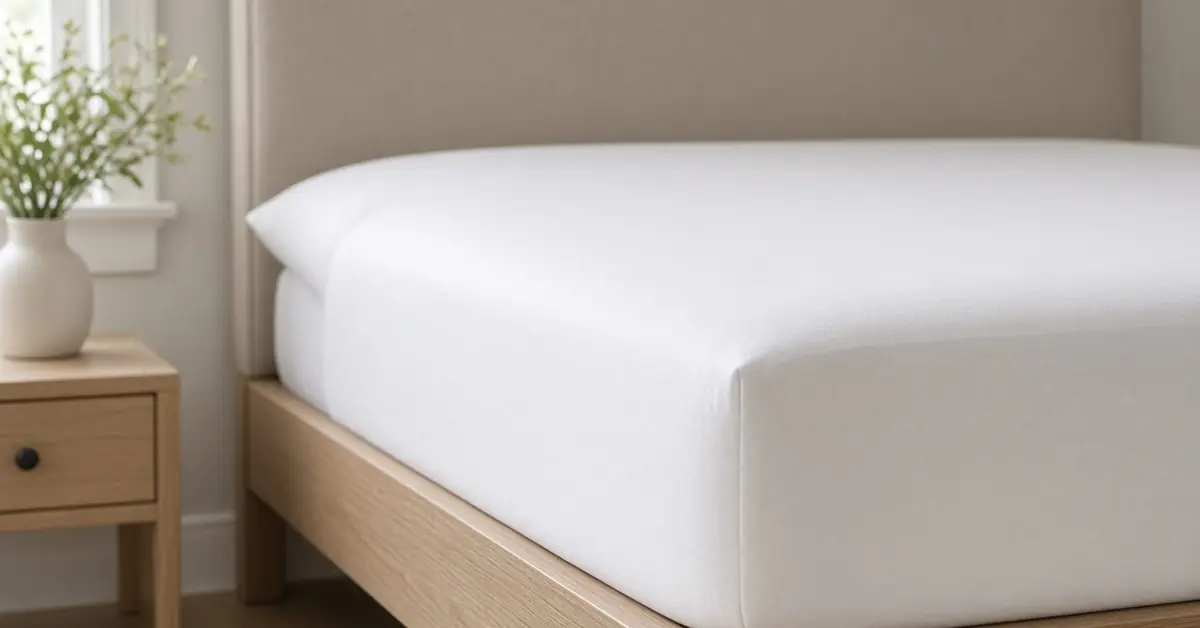
A bare mattress corner in the morning is more than a sign that you moved in your sleep. In most cases, the sheet was already struggling to hold on. It may be too shallow for the mattress, fitted slightly out of line or relying on elastic that no longer has much stretch left.
Rather than pulling the corners tighter every evening, find out where the fit is failing. Once the sheet can wrap properly underneath the mattress, it should remain secure through an ordinary night’s sleep.
Diagnose the problem from the way the sheet moves
The position of the loose fabric offers a useful clue.
When one particular corner lifts, compare its elastic and stitching with the other three. That section may be stretched, or its seam may be sitting beside the mattress corner instead of directly over it.
If two or more corners come away, especially at opposite ends, the pockets are probably too shallow. A sheet that stays attached but wrinkles beneath you has the opposite problem: there is too much fabric.
A mattress topper can change things overnight. A sheet that once fitted perfectly may start lifting as soon as an extra 5 cm of foam or wool is added.
Take the measurements that matter
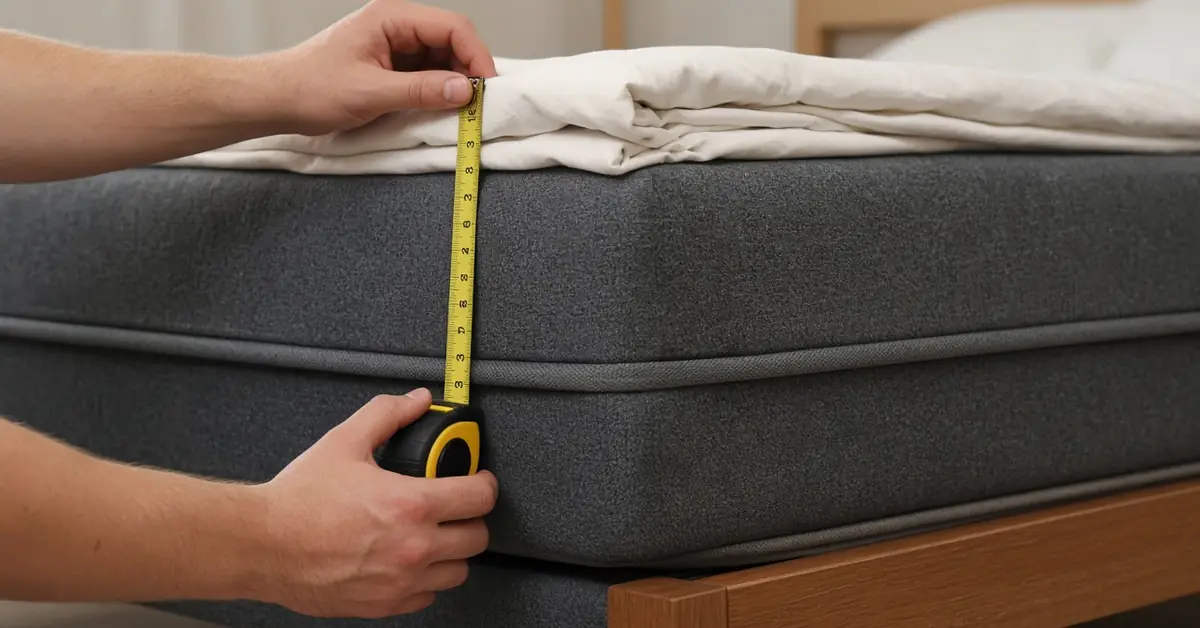
Strip the bed down to the protector, topper and mattress. These layers form the surface that the fitted sheet must cover, so measure them together.
Record three figures:
- Width across the mattress
- Length from head to foot
- Total depth, including the protector and topper
Imagine a mattress that is 28 cm deep with a 5 cm topper. The sheet needs to cover 33 cm before any fabric can turn beneath the mattress. A pocket designed for a 25 cm depth will sit under tension and is likely to work its way upwards.
Allow a little spare depth for tucking, but not so much that the sheet hangs loosely. If you need to confirm whether the mattress follows a recognised British size, these common UK mattress measurements provide a useful comparison. Still, use your own measurements when ordering. Imported and bespoke mattresses do not always match the dimensions suggested by familiar names such as double or king.
Buy deeper, not simply bigger
Moving up to the next bed size rarely fixes shallow corners.
A king sheet placed on a double mattress has extra material across its width and length. It may still have the same pocket depth, leaving you with loose fabric on top and little grip underneath.
Keep the correct width and length, then select the depth separately. Product descriptions usually state the maximum mattress depth the sheet will accommodate. Terms such as “deep” and “extra deep” are not consistent across every range, so check the number in centimetres.
The difference is easy to spot once the sheet is fitted. Correct pockets sit beneath the mattress without pulling the corner seams down its sides. Oversized pockets leave folds that can travel towards the centre of the bed.
Pillow top mattresses are often deeper than standard ones, so measure yours before buying sheets if you sleep on a design such as the Sormiel 5000 pocket sprung pillow top mattress or the Fimiara 2000 pocket gel pillow top mattress.
Give every corner an equal share of the tension
Put the sheet on at the head of the bed first. Those corners are usually the most awkward to reach, particularly when the bed sits close to a wall or has a substantial headboard.
Pull each pocket over the corner rather than stretching it from the middle of the bed. The vertical seam should follow the edge of the mattress. Once both top corners are secure, fit the bottom pair and run your hands around the full perimeter.
Check that the elastic has turned beneath the mattress. If it stops halfway down the side, it has nothing to grip.
After fitting all four corners, smooth the sheet from the centre outwards. Should the surface look twisted, remove it and rotate it. Plain sheets give few clues about which way they should face, and fitting one sideways creates uneven tension even when it appears close to the right size.
Make sure the lower layers are not pulling it loose
Sometimes the sheet is only following a moving topper.
Push the topper back into its proper position and inspect its corner straps. They should lie flat and hold the topper without curling the mattress corners. Replace straps that have become slack or detached.
A protector can alter both the depth and surface of the bed. Thick quilting requires a deeper sheet, while some smooth waterproof protectors offer less friction. If the trouble began after buying a new protector, remake the bed without it during the day. You will quickly see whether the sheet fits the mattress more securely on its own.
Do not abandon the protector permanently if it is required by the mattress guarantee. Instead, find a protector that fits closely and include its depth when choosing your next sheet.
Know when the elastic is finished
Turn the sheet over and look at the gathered edge. Healthy elastic contracts as soon as you release it. Worn elastic stays long and flat, leaving the corners with little pulling force.
Sheets with elastic around the whole perimeter tend to hold more evenly than designs elasticated only at the corners. The sides contribute to the grip, so movement is not concentrated in four short sections.
Laundry habits affect the elastic as well. Follow the care label and avoid hotter washing or tumble-drying settings than the fabric needs. Repeated high heat can weaken elastic and may shrink the surrounding material, making an old sheet both looser at the edge and tighter over the mattress.
Replacing the elastic is possible if the fabric remains in good condition. When the sheet has also become thin, misshapen or noticeably smaller, replacement makes more sense.
Add sheet straps only after correcting the fit
Sheet straps provide useful reinforcement for rounded mattress corners, adjustable beds and sleepers who move frequently. They cannot compensate for a badly undersized sheet.
Short straps attach diagonally beneath individual corners. Longer versions cross below the mattress and connect opposite sides. Clip them to the folded hem, where the material is strongest, and adjust them until the top is smooth.
There should still be some give in the strap. Excessive tension can damage the hem or cause a clip to release unexpectedly.
Do not pin sheets to the mattress. Safety pins can tear the fabric, puncture the mattress cover or open while the bed is occupied.
Try hospital corners with a flat sheet
An unusually shaped or very deep mattress may be easier to cover with a flat sheet. Choose one with enough material to tuck beneath the head, foot and sides.
Place it evenly over the mattress and tuck in the head and foot. At each corner, lift the side fabric onto the bed so it forms a diagonal line. Tuck the hanging section underneath, lower the lifted fold and secure that beneath the mattress too.
This creates the firm corners often seen on hotel beds. It takes longer than fitting an elasticated sheet, and access can be restricted when a mattress sits inside close wooden side rails, but the method works without special fasteners.
Check whether the mattress itself is travelling
Place a small removable marker on the bed frame and note the mattress position before sleeping. If the whole mattress shifts overnight, the sheet may be rubbing against the headboard or side rail and gradually peeling away.
Confirm that the mattress fits the internal dimensions of the frame. A large gap gives it room to move, while a mattress squeezed tightly between the rails makes it difficult to tuck the sheet properly.
Use only a mattress-grip product approved for this purpose and check the care instructions first. Carpet underlay, adhesive pads and unknown rubber mats may restrict airflow or mark the mattress cover.
Fix the cause once, rather than remaking the bed daily
A secure fitted sheet needs the correct footprint, enough pocket depth and elastic that still contracts. Get those three details right before spending money on clips or other accessories.
Write down the mattress measurements when you find a sheet that fits. If you later add a topper or replace the protector, measure the depth again. That small check prevents the familiar cycle of stretching, tucking and waking up on another exposed corner.
Frequently asked questions
Why do my sheets come off even though they are the correct bed size?
The width and length may be correct while the pockets are too shallow. Measure the mattress, topper and protector as one complete depth.
Can a fitted sheet be too deep?
Yes. Excessively deep pockets leave loose material beneath the mattress, allowing the sheet to wrinkle and shift.
Which corners should I fit first?
Fit the two corners nearest the headboard first, followed by those at the foot. Check that every corner seam sits directly on the mattress edge.
Will sheet straps stop any fitted sheet from moving?
They support a sheet that is already close to the right size. They should not be used to force a small or shallow sheet onto a larger mattress.
Why did my fitted sheet shrink after washing?
The wash or drying temperature may have been too high for the fabric. Follow the care label, and avoid unnecessary heat to protect both the material and its elastic.