

Blog
How to Iron Fitted Bed Sheets Without Fighting the Elastic


Fitted sheets are awkward to iron because they refuse to lie flat. The elastic pulls the fabric into pockets, while the large centre panel tends to gather on the floor. The solution is not to force the whole sheet into a rectangle. Treat the four corners and the main panel as separate areas, then work through them in order.
Begin While the Sheet Is Still Slightly Damp
A good finish starts before the ironing board comes out. Take the sheet from the tumble dryer before it becomes completely dry, or bring it in from the washing line while it retains a little moisture. Slightly damp fibres release creases more readily, particularly in cotton and linen.
If the sheet is already dry, use the iron’s spray function or a fine water mist, provided its care instructions allow this. The fabric should feel barely damp rather than wet.
It also helps to:
- Shake the sheet firmly after washing.
- Avoid cramming too much bedding into the washing machine or dryer.
- Remove the sheet promptly instead of leaving it compressed in the drum.
- Smooth the seams and corners before drying.
These small habits prevent deep creases that would otherwise need repeated pressing.
Let the Care Label Choose the Heat
Do not select the temperature from the fabric name alone. A sheet described as cotton may contain synthetic fibres, elastic or a special finish that requires gentler treatment.
The GINETEX guide to textile-care symbols explains that the dots inside the iron symbol represent the permitted temperature range:
| Care-label mark | What it means |
|---|---|
| One dot | Use low heat |
| Two dots | Use moderate heat |
| Three dots | A hotter setting is permitted |
| Crossed-out iron | Do not iron |
Allow the iron to reach the correct temperature before starting. For a dark, printed or sateen sheet, test a concealed corner first. Ironing it inside out or using a clean pressing cloth can prevent unwanted shine.
Prepare a Clear, Stable Work Area
Use a sturdy ironing board with a clean cover. A fitted double, king or super king sheet needs space to move, so clear the floor around the board and place a clean chair or laundry basket nearby to hold the finished sections.
Large sheets can conceal the iron’s flex as they spill over the board. Keep the cable visible and away from the hot soleplate. The iron-safety checklist from Electrical Safety First also advises checking the cable before use, never leaving the iron unattended and unplugging it afterwards.
The Corner-First Ironing Method
This method gives a neat result without stretching or overheating the elastic.
Step 1: Find the first corner
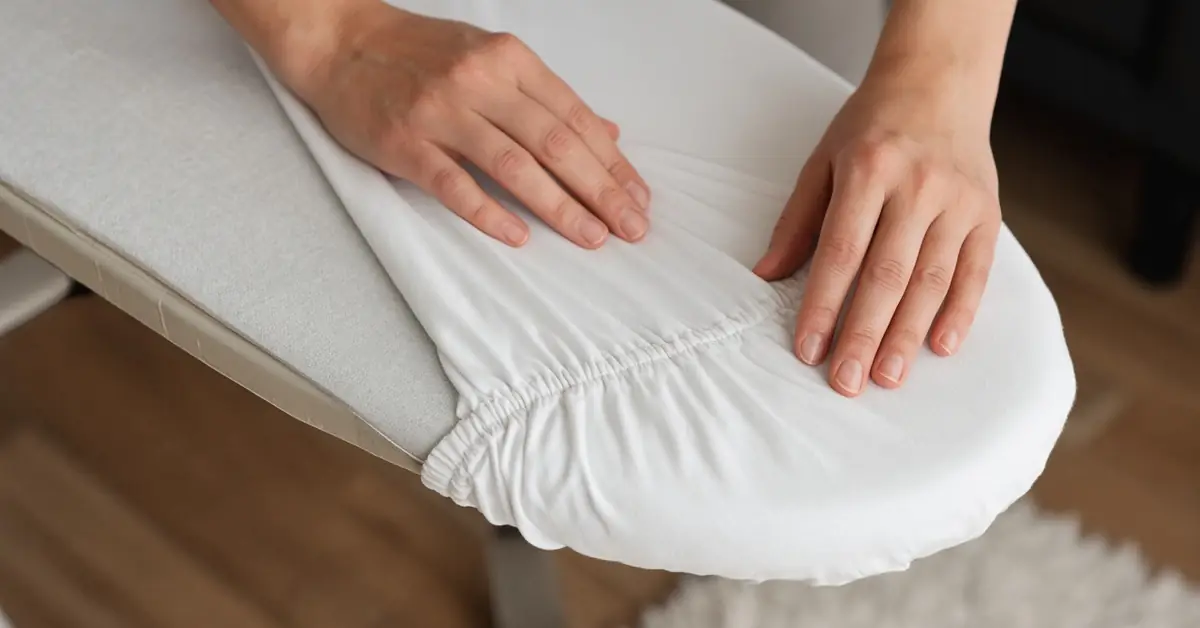
Turn the sheet inside out if this makes the corner seams easier to see. Slip one fitted pocket over the rounded end of the ironing board.
Step 2: Smooth the pocket gently
Pull just firmly enough to remove folds. Do not strain the elastic, as repeated stretching can weaken its grip.
Step 3: Press from the seam towards the centre
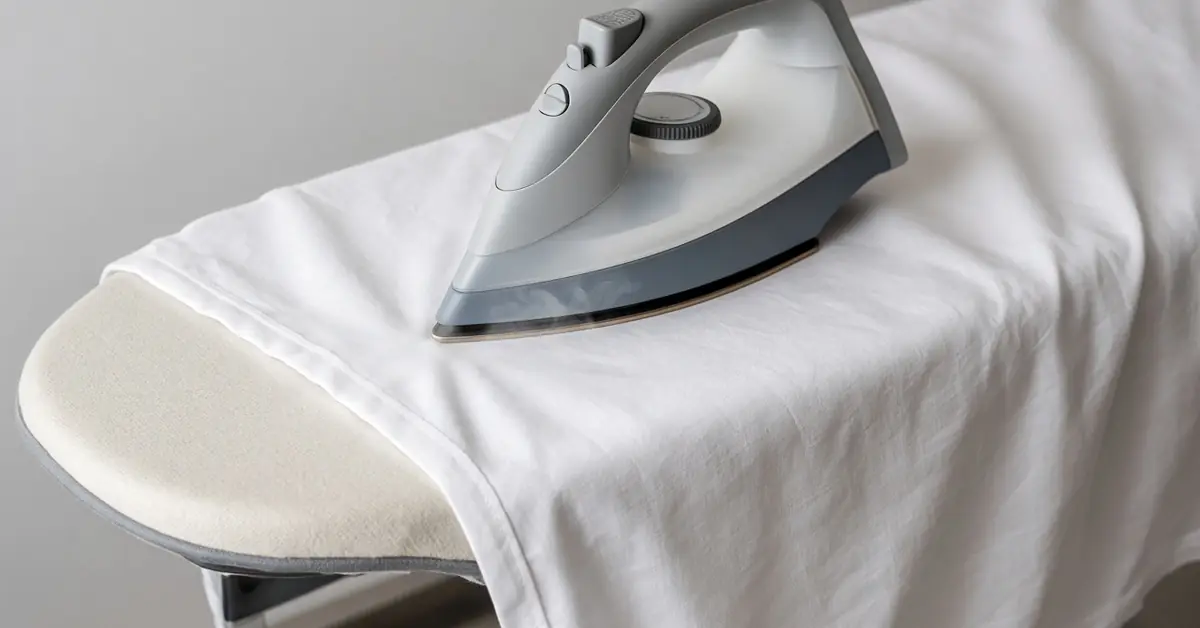
Use short strokes around the shaped corner, moving onto the flatter fabric. Avoid holding the hot soleplate directly on the elasticated edge.
Step 4: Rotate the sheet
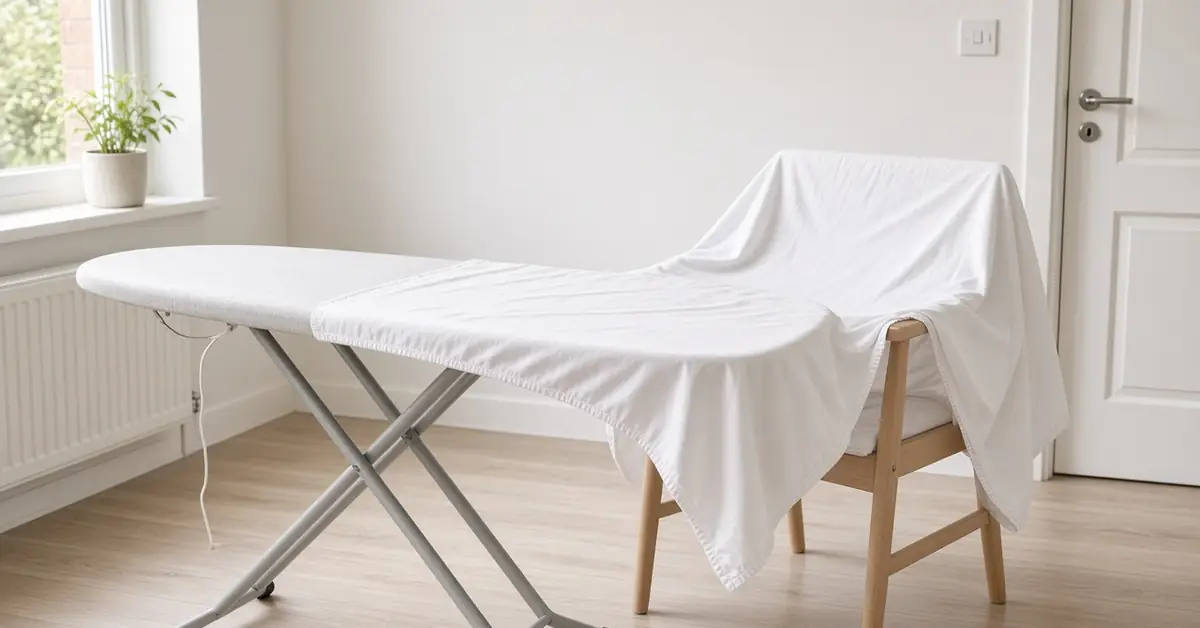
Repeat the same process with the remaining three pockets. Let the finished sections fall into the clean basket rather than bunching beneath the board.
Step 5: Iron the central panel
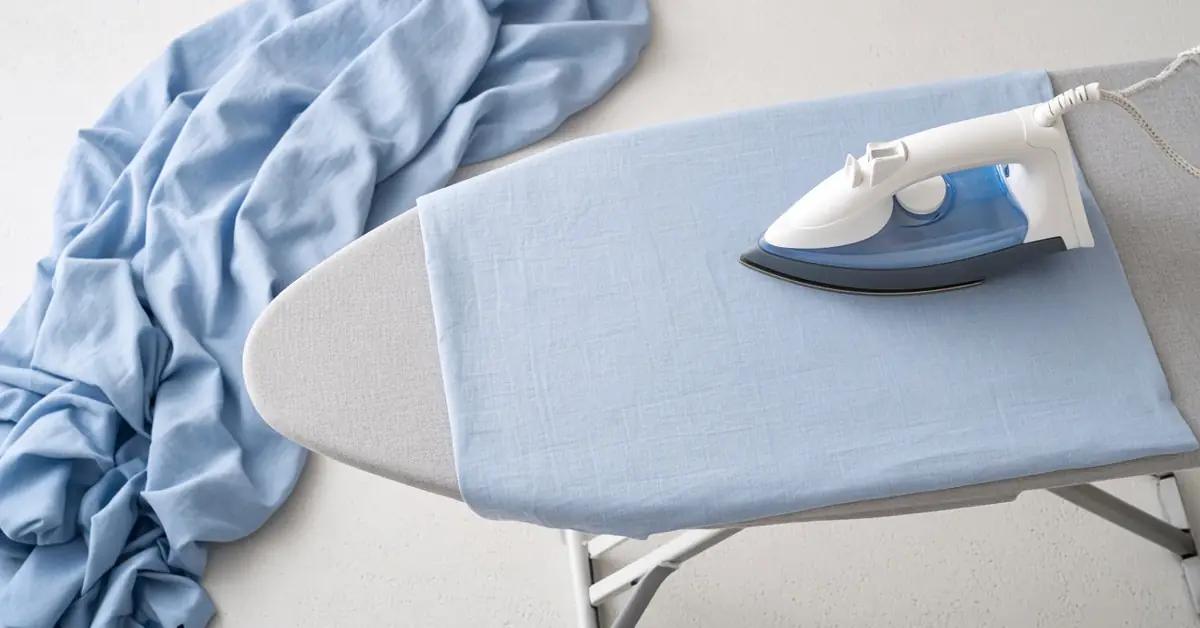
Lay the sheet lengthways across the board and smooth one manageable section at a time. Feed the fabric across as you work, checking that only one layer is creased beneath the iron.
Step 6: Finish the most visible area carefully
If time is limited, concentrate on the upper half and centre of the sheet. The elasticated sides will sit beneath the mattress, so they do not need an immaculate, hotel-style finish.
A Faster Method for King-Size Sheets
For a large sheet, nesting the corners first creates a shape that is easier to control.
Place one hand inside each of the two corners along a short side. Bring the corners together and tuck one inside the other, aligning their seams. Repeat at the opposite end, then bring both paired sets together. The sheet should now resemble a loose rectangle.
Fold it lengthways to fit the board and iron the visible panels in sections. Turn it over once to reach the other side. This method may not remove every crease between the layers, but it produces a tidy everyday finish in less time.
Adjust Your Technique to the Fabric
The care label always takes priority, but the following approach works for many common bed-sheet materials:
- Cotton: Usually responds well to moisture, steam and firm strokes.
- Linen: Is much easier to press while damp. Iron both sides if you want a particularly crisp finish.
- Polycotton: Normally needs less heat and pressure than pure cotton.
- Polyester or microfibre: Use a low setting and keep the iron moving to avoid heat damage.
- Sateen or dark-coloured fabric: Work from the reverse side or place a pressing cloth between the sheet and iron.
Do not iron over a stain. Heat may make the mark more difficult to remove.
Folding the Sheet Without Creasing It Again
Let the sheet cool and dry fully before putting it away. Nest the corners as described above, smooth the elasticated edges inward, and fold the resulting rectangle into thirds.
Avoid ironing the sheet directly on the bed. A mattress does not provide a stable, heat-resistant surface, and steam can introduce moisture where it is difficult to disperse.
Fitted sheets sit best when they match the mattress depth. The Isassio 1000 pocket sprung mattress and the Randien 2000 pocket orthopaedic mattress, for example, are both 10in deep, so measure against that figure when choosing sheets.
Conclusion
The easiest way to iron a fitted bed sheet is to stop treating it like a flat sheet. Press each pocket over the end of the ironing board, protect the elastic from direct heat, and finish the central panel in controlled sections.
Over time, better drying habits make the job even shorter. Remove sheets while slightly damp, smooth them promptly and store them only after they have cooled. The result is a cleaner-looking bed without turning ironing day into a wrestling match.
Frequently Asked Questions
Do fitted sheets have to be ironed?
No. Ironing is optional, but it can give cotton or linen bedding a smoother finish and make folding easier.
Should I iron a fitted sheet when it is wet or dry?
Slightly damp is usually best. Do not iron a soaking-wet sheet, and always follow its care label.
Can I iron a fitted sheet while it is on the mattress?
No. Use an ironing board or another stable, heat-resistant surface to protect the mattress from heat and moisture.
How do I iron the elasticated corners?
Fit each corner over the rounded end of the ironing board, smooth the fabric gently and iron from the seam towards the flat centre.
What temperature should I use?
Follow the iron symbol on the care label. One dot means low heat, two moderate and three hotter; a crossed-out iron means the sheet must not be ironed.