

Blog
How to Keep a Cat Out of a Flower Bed: Safe, Humane Methods That Work


Finding paw prints, flattened seedlings or cat poo among your flowers is frustrating. The good news is that you do not need harsh chemicals or anything that could injure an animal. The most effective approach is to make the bed awkward to dig in, remove anything that encourages repeat visits and use a harmless surprise if the cat persists.
For most gardens, start with a physical cover over bare soil. Add dense planting as the border matures and, if necessary, position a motion-sensitive sprinkler beside the usual entry route. This combination addresses the reason cats choose flower beds in the first place rather than simply masking the problem.
Why cats choose flower beds
Freshly cultivated soil is soft, dry and easy to scrape, which can make it look like an outdoor litter tray. A quiet bed beside a fence or hedge also feels sheltered. Cats may return once they have found a convenient spot, particularly if their scent remains there.
That tells you where to concentrate your effort. There is rarely a need to cat-proof the whole garden: protect the exposed soil and the route the cat normally uses.
Clear the bed safely before adding a deterrent
Put on gardening gloves, lift any poo with a scoop and dispose of it according to your council’s household-waste guidance. Do not add cat waste to a home compost heap or work it further into the soil. Wash your hands thoroughly afterwards.
This is sensible routine hygiene for every gardener. The NHS advises wearing gloves while gardening and washing your hands afterwards, especially where soil may be contaminated with cat faeces. If you are pregnant, avoid handling the waste where possible.
Lightly rake the disturbed patch level and water it. Removing the waste matters before using a deterrent; otherwise, the familiar toilet area is still present beneath it.
Cover bare soil so the cat cannot dig
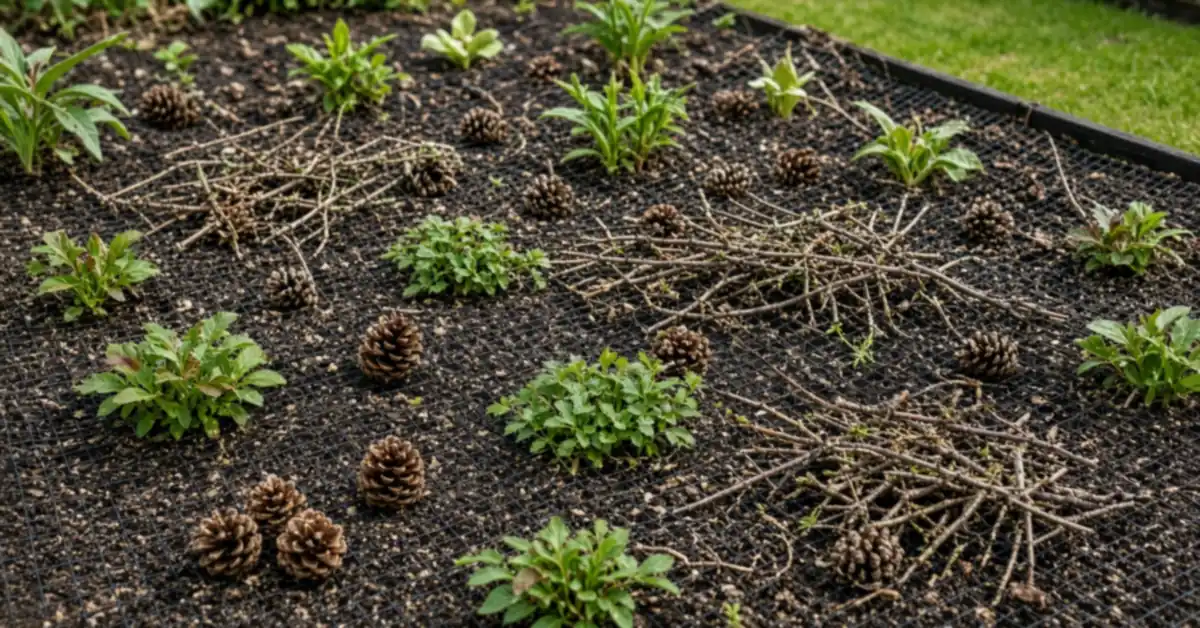
A barrier is usually the best first measure because it works whether or not the cat dislikes a particular smell.
- Fit rigid garden mesh. Lay plastic-coated or galvanised mesh flat over the soil and secure every edge with ground pegs. Cut generous openings around established plants and turn down or cover all sharp ends. You can conceal the mesh beneath a shallow layer of compost, but keep it close enough to the surface to prevent digging. For seedlings, use a taut mesh frame or cloche instead.
- Add coarse, stable cover. Arrange smooth pebbles, larger stone chippings or small rocks between plants. Choose pieces that are uncomfortable to rake aside but not sharp enough to injure paws. Short twigs placed across open patches can provide a temporary obstacle while new plants fill out.
- Close the gaps with plants. Plant perennials and ground-cover plants closely enough to leave little exposed earth when they mature. Until then, place pots in the larger gaps. The Royal Horticultural Society notes that densely planted borders are less attractive as toilet areas, while Cats Protection recommends stones, twigs and mesh as humane obstacles.
Do not leave loose netting draped over a bed. Keep any mesh taut, firmly fixed and checked regularly so cats, birds and hedgehogs cannot become entangled.
Use water as a gentle second line of defence
Cats tend to favour dry, loose ground, so keeping newly sown rows lightly moist can make them less inviting. Water for the needs of the plants, though; do not leave unsuitable plants in constantly wet soil.
For a repeat visitor, a motion-sensitive sprinkler is more consistent than waiting by the window. Aim its sensor at the cat’s approach, not at a pavement or bird-feeding area, and set it to the lightest effective spray. Both the RSPCA and Cats Protection suggest motion-activated water as a humane deterrent. Never use a high-powered jet or corner the cat.
Ultrasonic devices are another option, but results vary. Shrubs and fences can block the sound, some cats ignore it, and the noise may affect other animals. Try one only after fixing the inviting soil surface, and position it exactly as the manufacturer directs.
Remove reasons for the cat to return
A flower bed may be the toilet, while food elsewhere is the attraction. Keep bin lids closed, clear spilled seed beneath bird feeders and never feed a visiting cat. If practical, patch low gaps in a fence, although a determined cat can climb and complete exclusion is unlikely.
If it is your own cat, provide a clean indoor litter tray. You could also create a small, private toileting patch elsewhere using loose soil or sand and clean it regularly. Do not create such an area for neighbourhood cats, as it may invite more visits and cause territorial conflict.
Be cautious with scented remedies
Commercial cat repellents can help in a small area, but rain and watering may wash them away. Choose a product specifically labelled for use around cats and the plants in your bed, follow the instructions and expect to reapply it. Scent alone is rarely as reliable as a physical barrier because individual cats respond differently.
Avoid internet recipes containing cayenne or other pepper, garlic, onion, coffee grounds, vinegar, bleach or essential oils. “Natural” does not mean harmless: Cats Protection specifically warns against using these substances as cat deterrents. Do not use mothballs, poison, traps, sharp objects or anything intended to frighten or hurt the animal.
A practical plan for a problem flower bed
On the first day, clear the waste safely, water the affected patch and cover every area of bare soil with secured mesh or smooth stone. Move pots into temporary gaps. Over the following week, replace anything that has shifted and watch where the cat enters. If fresh disturbance appears, add a motion-sensitive sprinkler aimed at that route.
Keep the measures in place while planting becomes established. Once the foliage covers the soil and the cat has stopped visiting, reduce temporary deterrents gradually rather than removing everything at once.
Conclusion
The best way to keep a cat out of a flower bed is to change what the bed offers. Cover soft soil, fill planting gaps, clear waste promptly and use a gentle motion-triggered spray only if the physical changes are not enough.
This layered approach is safer and more dependable than strong-smelling home remedies. As the border fills out, it should become naturally less appealing, leaving you with less deterrent equipment to manage and healthier, undisturbed plants.
Frequently asked questions
What is the most effective way to keep cats out of a flower bed?
Secure mesh or a layer of smooth, coarse stones over bare soil is the best starting point. It removes the soft digging surface that attracts cats.
Can I put coffee grounds in flower beds to deter cats?
No. Coffee grounds can be harmful to cats if ingested and are not a suitable deterrent. Use a physical barrier instead.
Do ultrasonic cat deterrents work?
They work for some cats but not others. Their range can be obstructed by planting and fences, so they are best treated as a secondary measure rather than the main solution.
Is chicken wire safe to use on a flower bed?
It can be, provided it lies flat, is firmly pegged down and has no exposed sharp edges. Check it regularly and never leave it loose where wildlife could become trapped.
How can I stop my own cat using the flower bed as a toilet?
Keep a clean litter tray indoors and make the flower bed difficult to dig in. If appropriate, offer a separate, easy-to-clean outdoor toileting patch away from your planting.